
A large share of the houses built around Charlotte between the early 1980s and the late 1990s were clad in pressed hardboard siding. It looked like wood, cost less, and once water found its way into a butt joint or an unpainted bottom edge it swelled, delaminated and rotted from the inside. If you own a house in Matthews, Mint Hill, Indian Trail or east Charlotte from those years, the soft, bulging boards under your windows are that siding reaching the end of its life. It is the most common siding call we get.
The second most common is vinyl from the 2000s that has gone brittle in the sun on the south and west elevations, and the third is trim and fascia rot on otherwise sound fiber cement where the caulk joints were never maintained. Up To Date Construction Group handles all three, as a licensed general contractor rather than a siding-only installer. That matters because the failures that matter are never in the siding itself. They are in the sheathing, the framing and the flashing behind it, and those are carpentry.
What you get is a written, itemized quote naming the siding product, the weather-resistive barrier, the flashing at every window, door and roof intersection, the trim package, and an allowance for sheathing replacement priced per sheet before we start. You see photos of anything we replace behind the wall.
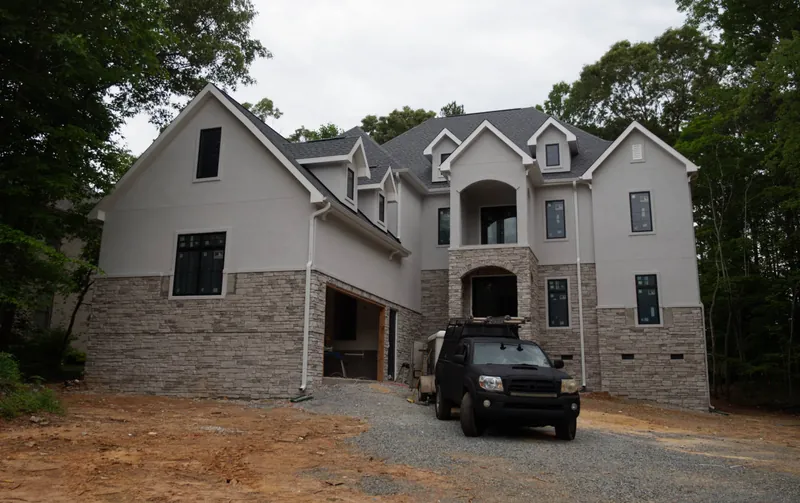
Siding Materials We Install
Fiber cement
Products such as James Hardie lap siding, panels and trim. Fiber cement does not rot, does not burn, holds paint well and handles Charlotte's humidity and summer storms. It is heavier and more labor to install than vinyl, which shows in the price, and it is what we recommend most often for a house the owner intends to keep.
Engineered wood
Products such as LP SmartSide: treated wood strand board with a resin overlay. Lighter than fiber cement, easier to cut and fasten, takes paint well and comes in longer lengths with fewer joints. A strong middle option and a good match for the wooded lots in Weddington and Waxhaw where a wood look is wanted without wood maintenance.
Vinyl
Still the lowest-cost option and a reasonable one for a rental or a house being sold. We install it over new house wrap with proper flashing and the expansion gaps it needs, which is what most of the failed vinyl we replace never had.
Trim, soffit and fascia
Often the part that has actually failed. We rebuild rotted fascia and rake boards, replace soffit, and wrap or replace trim in the same material as the siding so the whole envelope ages at one rate.
What Is Behind the Old Siding
On a full re-side we strip to the sheathing, and the sheathing tells the story. Blackened OSB below a window means the sill flashing failed. A soft band along the bottom of a wall means splash-back and no weep gap. Rot at the roofline means the kick-out flashing where the roof meets the wall was missing, which is common on houses of every age in this market. We replace sheathing per sheet at the price in the quote, repair framing where it is needed, install new weather-resistive barrier and flash every opening before a single piece of siding goes on. Reusing old house wrap is how leaks appear behind new siding a year later, and we do not do it.
How a Re-Side Goes
Visit and quote. We look at every elevation, probe suspect areas, and send a written quote with product options if you want to compare. Permit. Where sheathing, structure or windows are part of the work, a permit is pulled through the county or city with jurisdiction. Materials. Siding, trim and barrier are delivered ahead of the crew. Strip, repair, wrap, flash, install. A typical two-story house takes one to two weeks depending on material and how much repair turns up. Paint or finish, inspection, walkthrough. Pre-finished products need caulk and touch-up; primed products are painted. We walk every elevation with you before calling it done.
Why Choose Us for Siding
- Carpentry is our trade. Sheathing, framing and flashing repairs are in scope and priced up front, not discovered and billed later.
- New barrier, new flashing, every time. The siding is the finish; the barrier and flashing are the waterproofing.
- Roof and siding together. One mobilization, one dumpster, one permit visit. Ask for the combined quote.
- Local and owner-run. Based in Indian Trail, run by the owners, in English or Spanish.